“Mom, I want to work for a foreign company.”
It was 1992. At 23, I was about to graduate from college in China. I called my mother, excited and full of hope.
There was a long silence. Then she said: “You are nothing. Why would a foreign company want to hire you?”
I was stunned. Tears began streaming down my face.
I had been dreaming of working for a foreign company. I was about to graduate with a degree in English. What better place to put my English to use?
“You don’t have a technical degree,” my mother continued. “Your English degree is worth nothing. Come work for my company.”
My mother had worked for the same company since graduating from college. Good benefits. Eight-hour workdays. A long lunch break. Most importantly, job security.
I don’t remember how that phone call ended. But I remember my tears and those three words: You are nothing.
They sank deep inside me. Until that moment, I had been so excited about my future, so certain that the world was full of possibilities. Now, for the first time, I began to doubt myself.
What if she was right? What if I was nothing?
After graduation, I landed a job as a receptionist at the Kempinski Hotel. In my parents’ eyes, it was a low-level position. But I didn’t care. It was a foreign company.
I worked night shifts. Sometimes I was so exhausted that I fell asleep on the floor behind the front desk. Once, my American boss caught me, and we got into a big argument.
So much for my career at a foreign company.
A year later, I left the hotel for Motorola, which had just opened an office in Beijing. I helped recruit 40 engineers and set up the new office. Finally, I was putting my English degree to good use. But I don’t remember telling my mother about it.
When I turned 26, my parents decided it was time for me to get married. They began introducing me to engineers and scientists. In my memory, they all wore thick glasses and had serious expressions on their faces.
I didn’t want to be matched. I didn’t want my life decided for me.
I wanted to get away, to be free to pursue my own dreams, to go somewhere no one could ever tell me again that I was nothing.
I left for Worcester, Massachusetts, to pursue my MBA.
Worcester was nothing like the America I had imagined. Everything seemed gloomy—the weather, the streets, even the people walking down them.
I worked as a waitress while attending school. I lived in a rundown apartment complex frequented by homeless people. Some months, I couldn’t pay the rent.
I never told my parents how scared and broke I was. I would rather struggle alone than be reminded that I was nothing.
After graduation, I married Mike. We had met at Motorola. He was American and 22 years older than me. We got married in Las Vegas, and I didn’t tell my parents until six months later.
I knew Mike was everything my parents would never have chosen for me.
Somehow, I liked that feeling.
Soon, Mike found a job in San Diego, and we settled here. I built a career in corporate finance.
Eventually, I quit my job to flip houses. My first flip went so well that I thought I was on a winning streak. So I doubled down and bought several more.
Then the financial crisis hit.
Suddenly, I had multiple remodeled properties sitting on the market. Cash was disappearing. Credit card debt was mounting. My dream of self-employment had failed miserably. I went back to work.
But apparently, I wasn’t finished trying.
A few years later, I quit my job again and returned to real estate. The years were lean, and income was unpredictable.
But at least there was income.
Then even that disappeared.
No prospects. No sales in sight. My back was against the wall.
For the first time, I imagined my family and me becoming homeless.
And once again, I didn’t tell my parents.
Even after all those years, thousands of miles away, I could still hear those three words:
You are nothing.
For a long time, I thought I was simply independent. Ambitious. A risk taker. A rebel.
But now, at 57, I am beginning to see something I hadn’t wanted to admit.
Deep inside, part of me believed my mother.
Whenever I succeeded, I brushed it off. I told myself it was something anyone could have done.
But whenever I failed, I told myself I wasn’t smart enough, technical enough, or capable enough.
My successes were never proof that I was capable. But my failures were always proof that I wasn’t.
For more than three decades, I thought I was trying to prove my mother wrong.
But perhaps the person I was really trying to convince was myself.
Even today, I sometimes wonder what my life would have been like if I had studied engineering or another technical field.
Perhaps I would have found a stable career, with a steady paycheck, and fewer financial struggles.
But would I have taken all those risks? Would I have had the courage to start over, again and again, after so many failures?
Would I have eventually built a business I am so proud of?
I don’t know.
But I know the life I have built, through successes and failures alike.
And at 57, I no longer want to spend my life trying to prove that I am worth something.
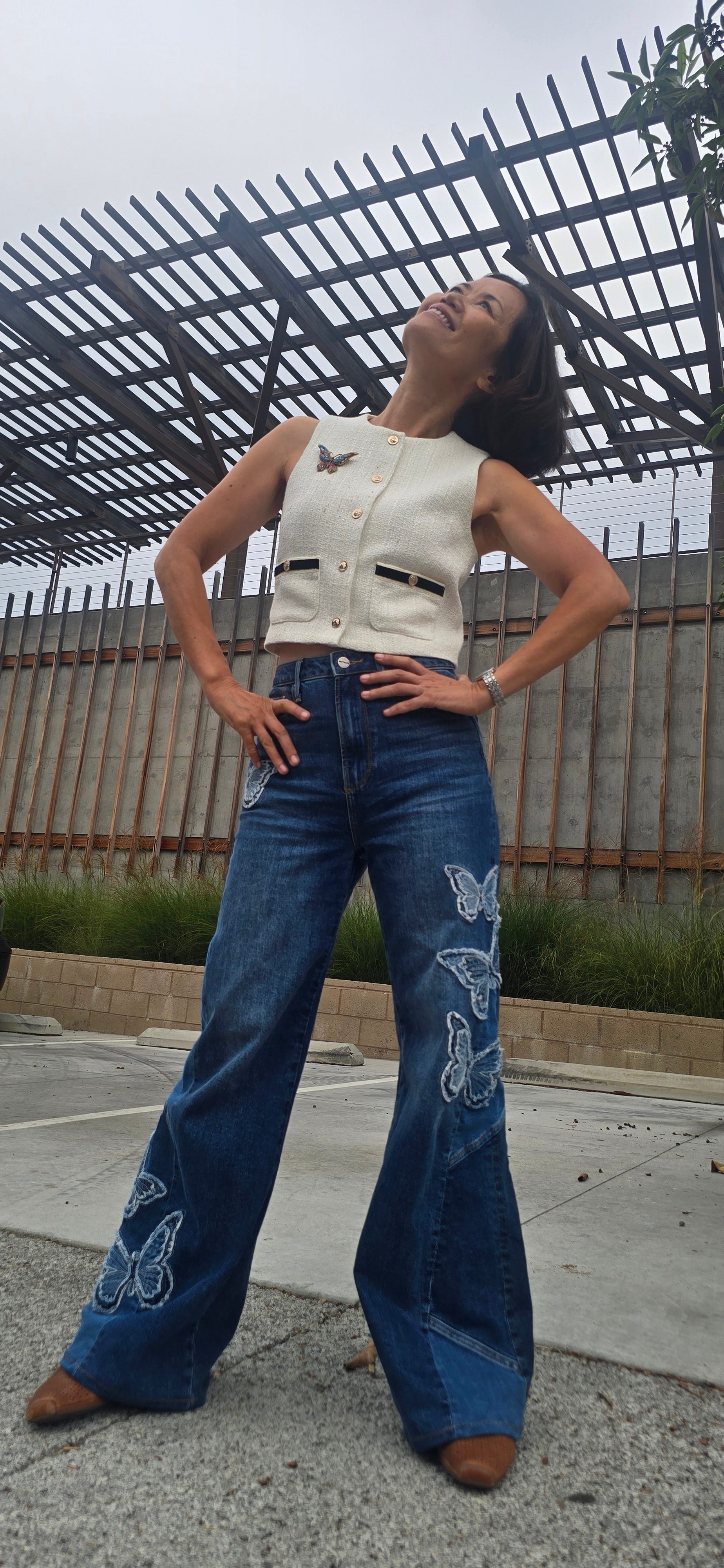
For the first time, I can see myself spreading my wings. The wind rises beneath them, growing stronger and stronger. I feel myself becoming lighter, as though nothing could hold me down.
I look up. The sky stretches endlessly, calling my name.
The possibilities are exhilarating. My heart is singing.
I am ready to take off.
I am free.